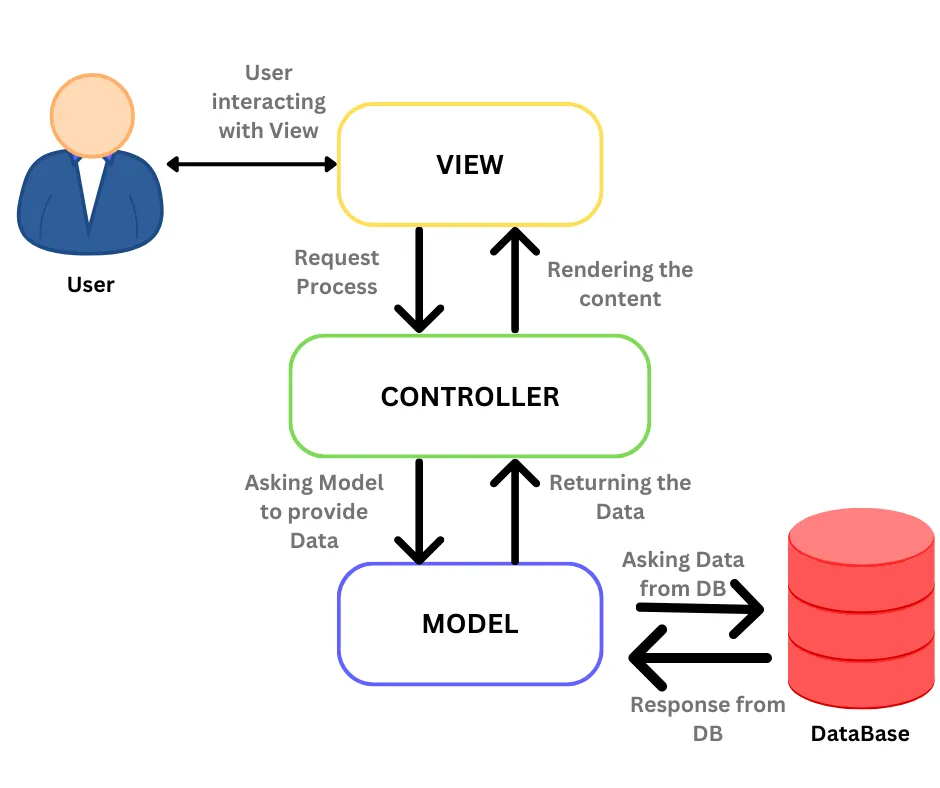
MVC separates an application’s data and domain rules, presentation, and request coordination. The important part is the responsibility of each layer; putting code into three folders is only an organizational choice.
Responsibilities
- Model: represents domain data and rules, including validation and persistence where appropriate. It is more than a database wrapper.
- View: presents information to the user, often through server-rendered templates.
- Controller: receives input, coordinates work with the model or application services, and selects a response.
Separating HTML, CSS, and JavaScript files can improve organization, but it does not establish MVC responsibilities.
Example: listing gym subscriptions
Consider a server-rendered subscription dashboard:
- A request to
GET /subscriptionsreaches the matching route and controller. - The controller asks the application logic for the relevant subscriptions.
- Domain rules determine their status, and persistence code retrieves stored data.
- The controller passes the result to a view that renders the dashboard.
In a JSON API, the endpoint returns data rather than rendering an HTML view. A separate frontend handles presentation; avoid calling every API folder structure a complete MVC implementation.
Benefits and limits
Clear responsibilities make code easier to test, maintain, and discuss within a team. They can reduce the impact of changes, but dependencies still need careful design.
MVC does not guarantee performance, conflict-free collaboration, or independent deployment. Choose it when separating presentation from domain behavior helps your application, and keep business rules out of request handlers where practical.
For another explanation of the pattern and request flow, see Microsoft’s MVC overview.
Connect with me on LinkedIn to discuss backend engineering and application architecture.